

CHILL
Children Helping the Intelligence of Leading to Light
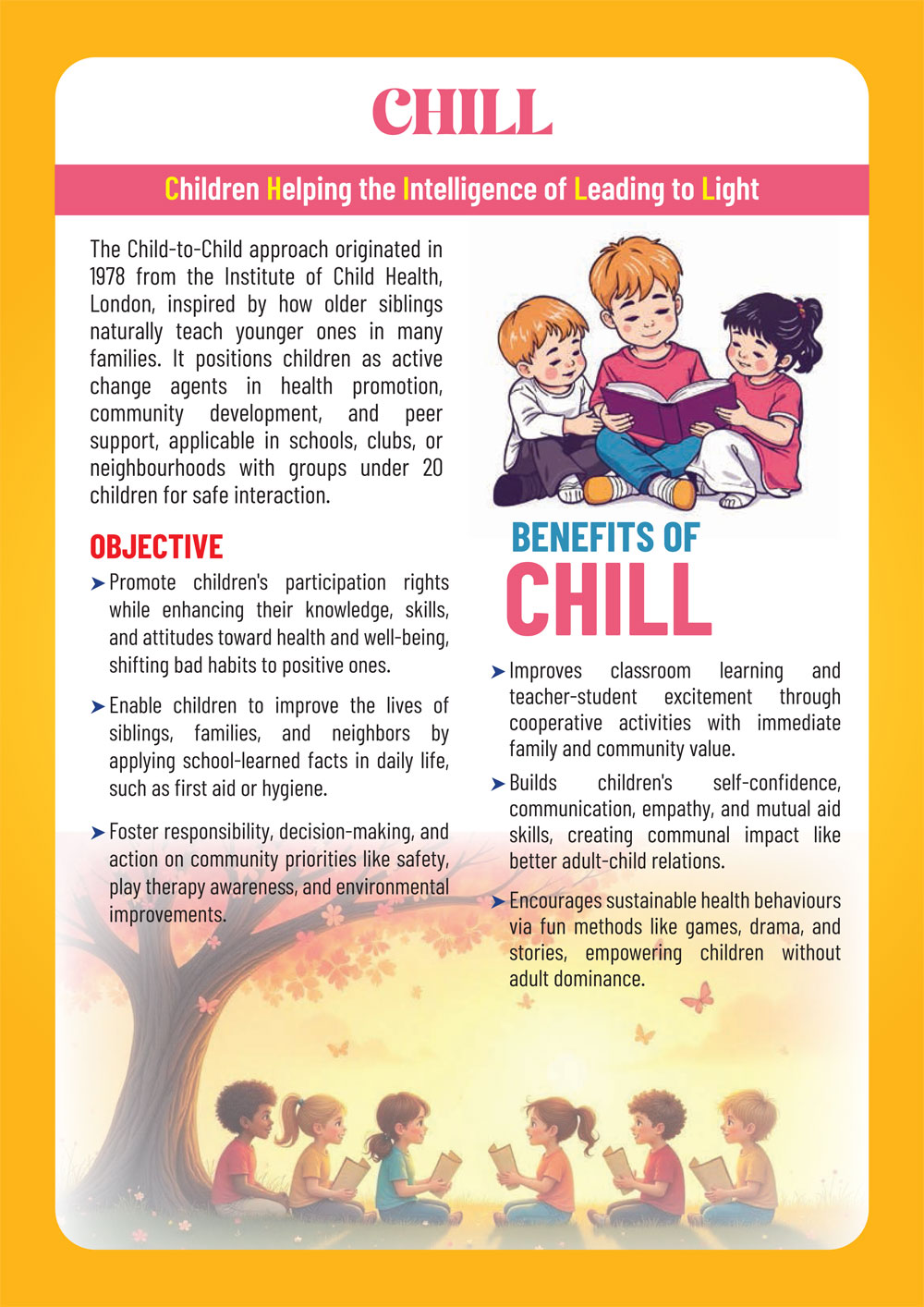
The Child-to-Child approach originated in 1978 from the Institute of Child Health, London, inspired by how older siblings naturally teach younger ones in many families. It positions children as active change agents in health promotion, community development, and peer support, applicable in schools, clubs, or neighbourhoods with groups under 20 children for safe interaction.
OBJECTIVE
- Promote children’s participation rights while enhancing their knowledge, skills, and attitudes toward health and well-being, shifting bad habits to positive ones.
- Enable children to improve the lives of siblings, families, and neighbours by applying school-learned facts in daily life, such as first aid or hygiene.
- Foster responsibility, decision-making, and action on community priorities like safety, play therapy awareness, and environmental improvements.
BENEFITS OF CHILL
- Improves classroom learning and teacher–student engagement through cooperative activities with immediate family and community involvement.
- Builds children’s self-confidence, communication, empathy, and mutual aid skills, creating stronger relationships between adults and children.
- Encourages sustainable health behaviours through fun learning methods such as games, drama, and storytelling, empowering children without adult dominance.